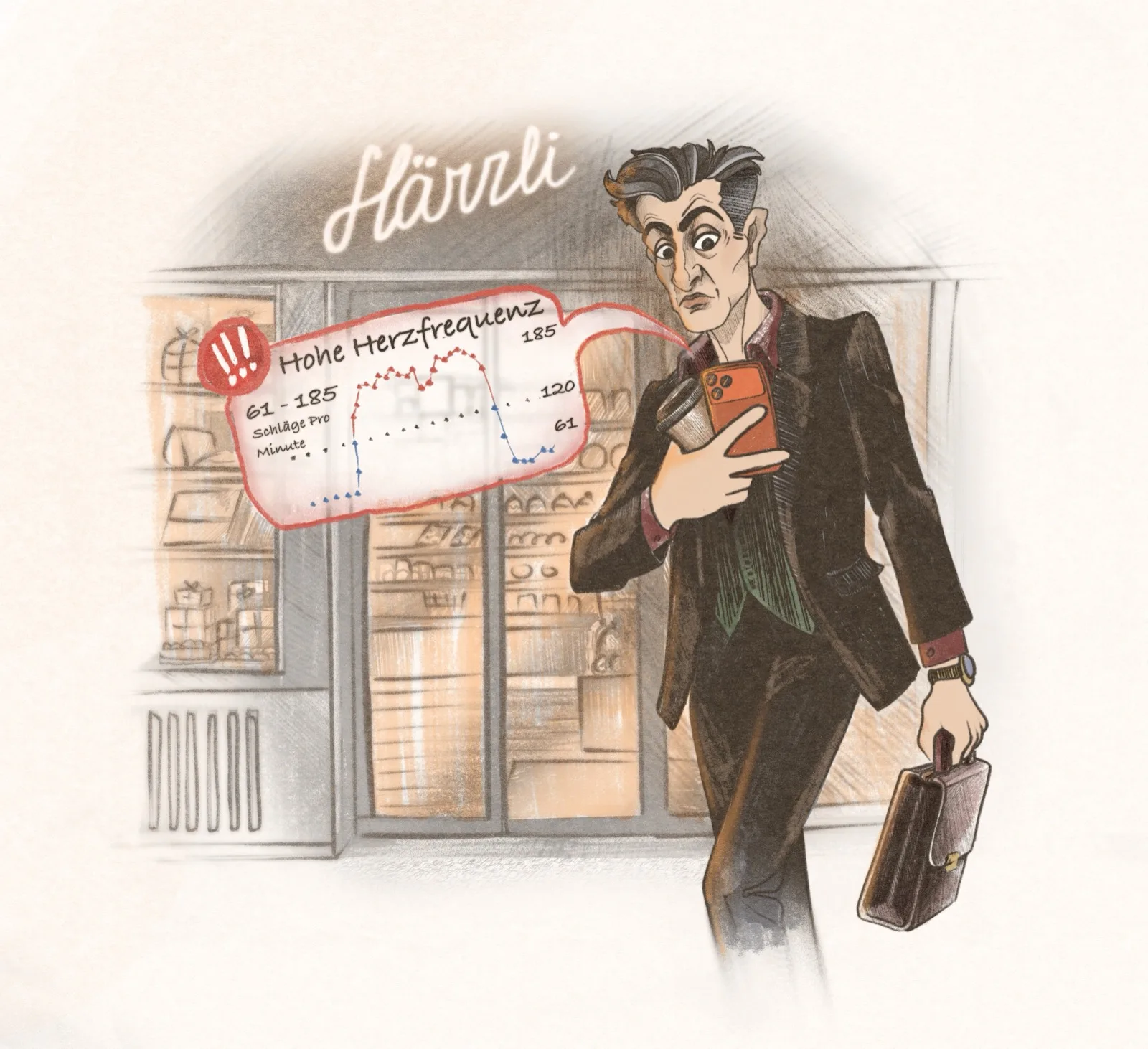
There is one diagnosis in which the language of poetry and the language of cardiology agree. When someone arrives in the emergency department with chest pressure and breathlessness after the death of their mother, a sudden separation or an unexpected job loss, the heart can temporarily take on a shape that blocks its output. That shape is named Takotsubo, after a Japanese octopus trap. In English the diagnosis goes by broken heart syndrome. The image is medically literal.
What a Takotsubo cardiomyopathy is
What happens in the heart. Catecholamines, endothelium and apical ballooning
At the centre of the pathophysiology is a massive release of endogenous catecholamines. Wittstein and colleagues showed in 2005 that adrenaline and noradrenaline levels on admission were several times higher than in a control group with Killip class III myocardial infarction: roughly three- to fourfold for adrenaline, roughly twofold for noradrenaline [Wittstein IS et al., NEJM 2005]. The acute dysfunction is accordingly explained by direct myocardial toxicity of the catecholamines, plus microvascular dysfunction and a stunning effect on the apical myocytes.
Why does it strike the apex of the left ventricle? Beta-adrenergic receptor density is higher in the apical myocardium than at the base. At extreme adrenaline levels the signalling cascade at these receptors switches from the stimulating pathway to the inhibitory one. The result is a regional loss of function with a compensatory overactive base, and with it the characteristic shape of the octopus trap [Ghadri JR et al., EHJ 2018].
Why the syndrome disproportionately affects women after the menopause has not been conclusively explained. Under discussion is a protective effect of oestrogen on endothelial function and on the microvascular response to catecholamines, which falls away after the menopause. In the InterTAK registry 89.8 percent of patients were women, and the mean age was 66.8 years [Templin C et al., NEJM 2015].
Which triggers are typical
The triggers are broader than the image of bereavement suggests. In the InterTAK registry roughly one in three patients had an emotional stressor, one third a physical stressor (acute illness, surgery, exertion), and in the rest no clear trigger could be identified.
- Bereavement in the family. Death of a partner, a parent or a child. The prototypical picture of broken heart syndrome. The diagnosis is often made hours to a few days after the event [Wittstein IS et al., NEJM 2005].
- Sudden separation or divorce. An abrupt end to a relationship, discovering infidelity, being left.
- Sudden job loss or an existential threat. Unexpected dismissal, financial crisis, looming insolvency.
- Acute physical illness or surgery. Sepsis, severe COPD exacerbation, the postoperative phase. These triggers dominate in surgical cohorts [Sharkey SW et al., JACC 2010].
- A heated argument or acute fear. A row, a panic attack, a road accident without physical injury.
- Positive events (happy heart syndrome). A wedding celebration, a surprise party, a lottery win, a reunion after a long separation. Clearly documented in the international registry [Ghadri JR et al., EHJ 2018].
The intensity of the trigger does not correlate linearly with the likelihood of developing Takotsubo. Some women go through severe life events without any cardiac reaction, others respond to fairly everyday arguments with the full picture. Which factors in the microcirculation and the autonomic nervous system decide this is the subject of ongoing research.
The rate of serious in-hospital complications, including shock and death, was comparable in Takotsubo patients to that in acute coronary syndrome. The diagnosis is therefore no harmless variant of a heart attack.
How Takotsubo differs from a heart attack in the emergency department
In the first hour the picture looks like an acute coronary syndrome. Chest pressure, breathlessness, occasionally nausea, ST elevations or T-wave inversions on the ECG, elevated troponin in the lab. Initial treatment therefore follows the heart attack pathway, including acute coronary angiography. Only there does the distinction become possible.
- ECG findings. Frequently ST elevations in the anterior leads, followed by deep, broad T-wave inversions and a prolonged QT interval over several days. The pattern resembles an anterior infarction but is usually more diffuse and less clearly attributable to one coronary artery's territory [Ghadri JR et al., EHJ 2018].
- Troponin and BNP. Troponin is elevated, yet relative to the pronounced wall motion abnormality it is often lower than in an anterior infarction of similar extent. BNP or NT-proBNP, by contrast, is frequently markedly elevated.
- Coronary angiography. The coronary arteries are normal or do not explain the regional dysfunction. This finding is a central InterTAK criterion [Ghadri JR et al., EHJ 2018].
- Echo and left ventriculography. Akinesia of the mid and apical segments with hyperkinesia of the base. On imaging this is pathognomonic for the typical variant. The InterTAK criteria also include midventricular, basal and focal variants.
- Cardiac MRI. Shows the wall motion pattern and oedema in the affected segments. The absence of a scar-type late enhancement component distinguishes Takotsubo from a myocarditic or ischaemic cause.
- Clinical context. Trigger, sex, age, postmenopausal status and the absence of classic ACS risk factors support the diagnosis. The InterTAK score integrates these variables [Ghadri JR et al., EHJ 2018].
In the acute situation the rule is: until coronary angiography and imaging have clarified the picture, the patient is treated as an acute coronary syndrome. The Mehta statement on heart attacks in women points out that the emergency department triage threshold tends to sit too high for women, and that their symptoms are more often classified as gastrointestinal or as an anxiety disorder [Mehta LS et al., Circulation 2016]. The right door is the emergency department or 144, the Swiss emergency number. A GP appointment the following day is the wrong one.
What the course looks like. Recovery, complications, recurrence
In most patients pumping function normalises within one to four weeks, often within days. Sharkey and colleagues showed in their Mayo cohort that the left ventricular ejection fraction recovers from a median of 35 percent on admission to normal values [Sharkey SW et al., JACC 2010]. Follow-up imaging shows complete restoration of wall motion, without any scarring.
This long-term outlook must not obscure the acute phase. In the InterTAK registry the rate of serious in-hospital complications, including cardiogenic shock and death, was at a level comparable to acute coronary syndrome [Templin C et al., NEJM 2015]. Common acute complications are cardiogenic shock due to dynamic obstruction of the left ventricular outflow tract, arrhythmias including torsade de pointes with a prolonged QT interval, and, more rarely, an apical thrombus.
The recurrence rate is low: in the Mayo cohort 5 percent of patients experienced a non-fatal recurrence over the follow-up period [Sharkey SW et al., JACC 2010]. Cardiological follow-up therefore makes sense. An established long-term drug prophylaxis does not exist.
Why the diagnosis matters, even when acute treatment looks similar
Three points argue against treating Takotsubo and heart attack as equivalent in the acute setting merely because the initial pathways overlap.
First, long-term therapy differs. A patient after an anterior infarction usually receives dual antiplatelet therapy for twelve months, a high-dose statin for life, a beta blocker and an ACE inhibitor. After an isolated Takotsubo with no coronary findings, this secondary-preventive architecture is neither harmless nor indicated.
Second, the diagnosis changes the view of the life phases ahead. A woman who developed Takotsubo after a bereavement is supported differently in comparable stressful situations later on. The recurrence rate is low, though it is not zero.
Third, there is validation. A patient whose chest pressure and breathlessness after a bereavement were classified as an anxiety disorder or a gastrointestinal complaint experiences the correct diagnosis as medical confirmation that her body's reaction was physically real. The AHA's Mehta statement named this point for acute ischaemia in women, and it applies equally to stress cardiomyopathy [Mehta LS et al., Circulation 2016].
Three thresholds beyond which you stop waiting
When to have a cardiological assessment in the emergency department or at Dein Team:
- Acute chest pressure, breathlessness or sudden exhaustion with nausea, shortly after a distressing event. Bereavement, separation, an accident, a serious argument. You do not wait for the next GP appointment. You dial 144 or go straight to the nearest hospital with acute cardiological care [Mehta LS et al., Circulation 2016].
- You have already had a Takotsubo event and are facing a new stressful phase. An operation, a major change in the family, another bereavement. A cardiological check-up and a clear emergency plan make sense.
- You are postmenopausal and in a chronically stressful phase of life. Caring for a relative, a long illness in your family or circle, professional upheaval. A structured cardiological assessment is appropriate in this constellation.
How the Women's Heart consultation at Dein Team works in this situation
The acute phase of a Takotsubo event belongs in the emergency department of a hospital with 24-hour cardiological care. What Dein Team Herzzentrum takes on is structured follow-up after the acute phase and cardiological assessment during a stressful phase of life.
Follow-up after Takotsubo includes echocardiography at three and at twelve months, a resting ECG to check the QT interval, a review of blood pressure, lipids including ApoB and Lp(a), HbA1c and SCORE2, and a check of the medication prescribed at discharge. Dr. Leone and PD Dr. Kleinecke make this distinction from the post-infarction architecture transparent, with you and your GP or gynaecologist. The internal-medicine and metabolic side is covered in the sister cluster at dtl.healthcare/frauenheilkunde-hausaerztlich-zuerich.
Where to read on in this cluster
- Frauenherz cluster hub. The overview of sex-specific differences in the cardiovascular system.
- Heart attack symptoms in women. The acute side, with a decision rule for the emergency situation.
- Menopause and heart health. Why the perimenopause is a cardiological turning point.
- Microvascular angina (INOCA). When symptoms persist even though the cardiac catheterisation is normal.
- Chest pain. Stress or heart? The decision rule between musculoskeletal, gastrointestinal and cardiac origin.
Frequently asked questions
:::faq
Can a person really die of a broken heart?
In rare constellations, yes. The rate of serious in-hospital complications, including cardiogenic shock and death, was at a level comparable to acute coronary syndrome in the InterTAK registry [Templin C et al., NEJM 2015]. The acute phase demands cardiological care as for a heart attack. In this sense the term broken heart syndrome is medically literal, no metaphor.
How quickly does the heart recover?
In most patients left ventricular function recovers completely within one to four weeks. In the Mayo cohort the ejection fraction on admission was a median of 35 percent and normalised over the course of follow-up [Sharkey SW et al., JACC 2010]. Imaging at three and twelve months is part of cardiological follow-up.
Can a Takotsubo event come back?
In the Mayo cohort 5 percent of patients experienced a non-fatal recurrence over several years of follow-up [Sharkey SW et al., JACC 2010]. Anyone who has had a Takotsubo benefits from cardiological support in comparable stressful phases later on. An established long-term drug prophylaxis does not exist.
Do only women get it?
Around nine in ten patients are women, most of them postmenopausal [Templin C et al., NEJM 2015]. Men can develop the syndrome too, often in the context of severe acute physical illness. The typical emotionally triggered form remains a diagnosis associated with the postmenopause.
Can a happy event trigger it as well?
Yes. The InterTAK data document a distinct happy heart syndrome, triggered by positive emotional events such as weddings or unexpected reunions [Ghadri JR et al., EHJ 2018]. The pathophysiology is the same: a massive release of catecholamines with subsequent myocardial dysfunction. What counts is the intensity of the emotion, positive or negative.
After a Takotsubo, do I need the same medication as after a heart attack?
Usually not. Dual antiplatelet therapy and a high-dose statin as ACS secondary prevention are not indicated after an isolated Takotsubo with no coronary findings. Beta blockers and ACE inhibitors can be useful in the early phase. We work out the exact architecture at follow-up with you and your GP.
Should I book a psychotherapy appointment after a Takotsubo?
Psychotherapy has no proven value as cardiological secondary prevention. Clinically, many women who had a Takotsubo after a severe life event benefit from psychological or psychiatric support during the grieving or processing phase. That is a separate indication, independent of cardiological follow-up.
:::
<a href="https://dth-herzzentrum.ch/termin/frauenherz-sprechstunde" class="btn btn--primary">Termin vereinbaren</a>