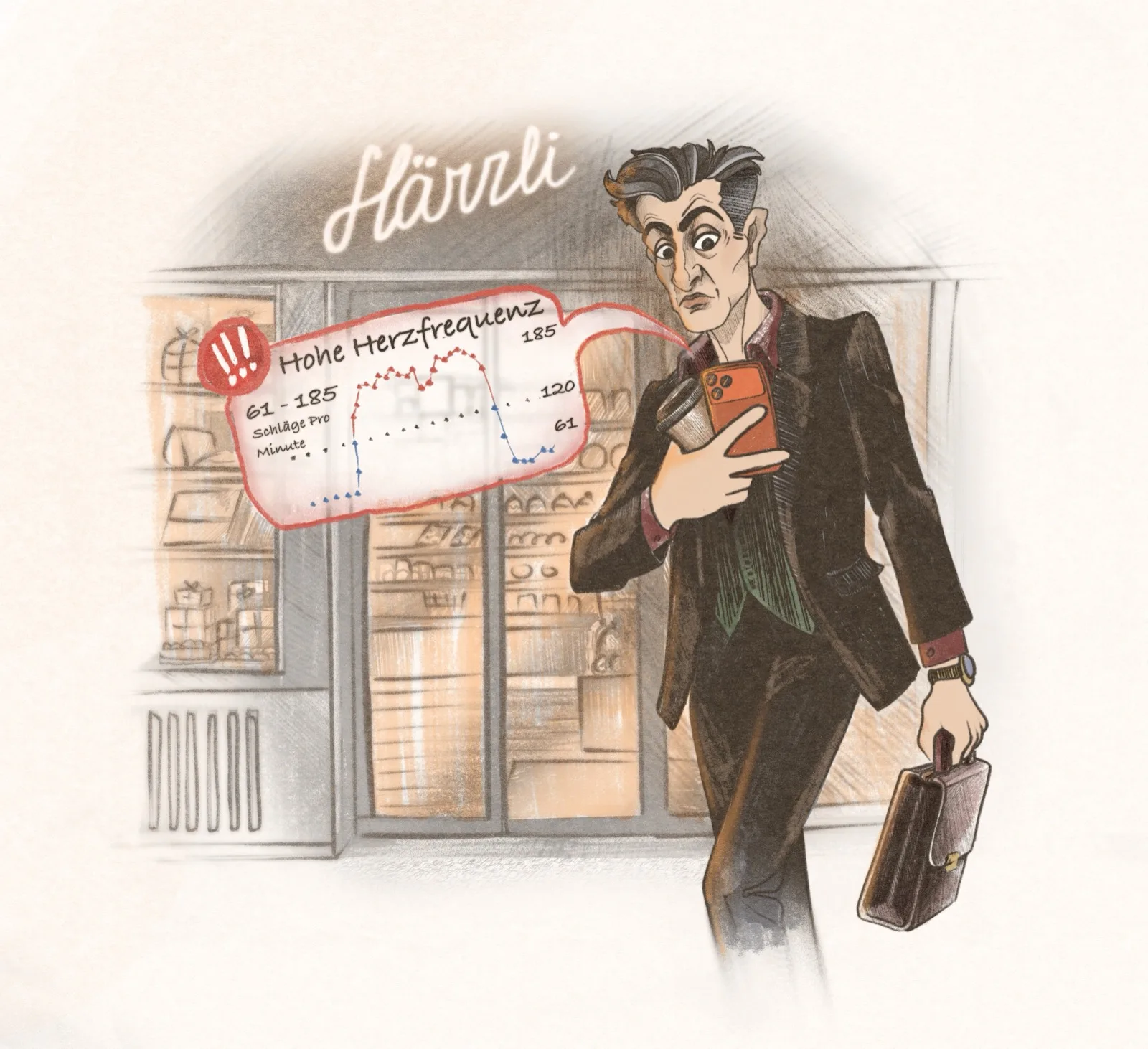
Cardiovascular disease remains among the most common causes of illness, hospital admission and premature death in Europe and Switzerland. The difficulty is that many heart conditions develop over years and the first symptoms are often underestimated. Early assessment of typical warning signs can, however, be decisive in preventing serious complications such as heart attack, stroke or heart failure.
Recognising a heart attack in time
- Pressure, tightness or burning in the chest
- Pain radiating to the arms, back, shoulder, neck or upper abdomen
- Shortness of breath
- Cold sweats
- Nausea or vomiting
- Pronounced weakness or dizziness
Women, older people and people with diabetes often have less typical symptoms. Breathlessness, unusual exhaustion, nausea or upper abdominal discomfort are frequently the main complaint.
Heart failure: when the heart's pumping power weakens
Heart failure (cardiac insufficiency) is among the most common cardiovascular diseases in older age. Symptoms often develop gradually and are therefore misinterpreted at first.
- Reduced physical capacity
- Rapid exhaustion
- Breathlessness on exertion or when lying down
- Swollen legs or ankles
- Racing heart or palpitations
Atrial fibrillation: the most common cardiac arrhythmia
Atrial fibrillation is the most common cardiac arrhythmia. The risk of stroke with atrial fibrillation is about five times higher than in people without this rhythm disorder.
The most important warning signals of the heart
- Racing or irregular heartbeat
- Drop in physical capacity
- Breathlessness on exertion or at rest
- Dizziness
- Chest pain or chest tightness
- Swollen legs or ankles
Sudden cardiac death: acting fast saves lives
Sudden cardiac arrest often occurs unexpectedly. Those affected lose consciousness within seconds and no longer breathe normally.
A common cause is severe cardiac arrhythmia such as ventricular fibrillation, usually triggered by a heart attack or other structural heart disease.
What matters in this situation:
- Call 144 immediately (the Swiss emergency number)
- Start chest compressions at once
- Use an automated external defibrillator (AED) if available
Every minute without resuscitation markedly lowers the chance of survival. Immediate chest compressions and early defibrillation are therefore decisive.
When is a cardiological assessment advisable?
A specialist examination is particularly advisable for new symptoms, a decline in physical capacity, or known risk factors such as high blood pressure, diabetes mellitus, raised cholesterol or a family history of heart disease.
- Chest pain or pressure in the chest
- Breathlessness on exertion or at rest
- Palpitations or a racing heart
- Dizziness or loss of consciousness
- New drop in performance
- Known cardiovascular risk factors
- Family history of heart attack or sudden cardiac death
Conclusion
Chest pain, breathlessness, cardiac arrhythmias or an unexplained drop in performance should not be dismissed as normal signs of ageing. Modern cardiological diagnostics often allow early detection and targeted treatment before serious complications occur.