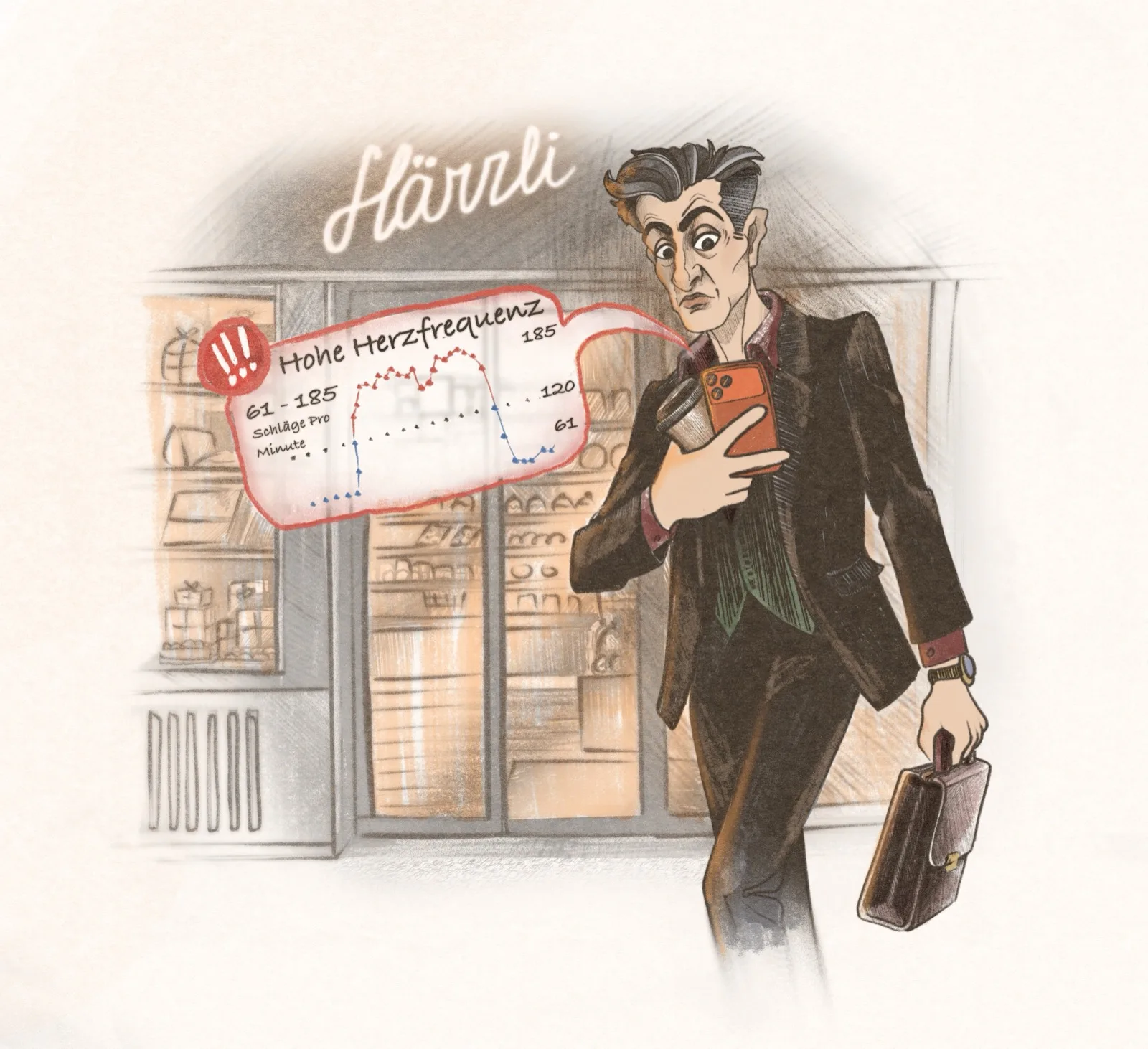
Shortness of breath is among the most common complaints in medicine.
Many people first notice breathlessness only during exertion. The causes range from harmless to serious heart or lung disease.
When can shortness of breath come from the heart?
Cardiac causes include coronary heart disease, heart failure, atrial fibrillation and other arrhythmias, heart valve disease, high blood pressure with cardiac involvement, or a previous heart attack.
Breathlessness as a possible warning sign of coronary heart disease
Women, older people and patients with diabetes in particular often show atypical symptoms. Breathlessness on exertion can be an important warning sign of impaired blood flow to the heart.
Heart failure: when the pumping power weakens
Typical complaints are breathlessness on exertion or lying down, fluid retention in the legs, and declining physical capacity.
Shortness of breath does not always originate in the heart
Breathlessness can have many causes. Heart disease is not always the reason.
Possible differential diagnoses include:
Lung diseases
- Pulmonary embolism
- Bronchial asthma
- Chronic obstructive pulmonary disease (COPD)
- Pneumonia
Internal medicine conditions
- Anaemia (low blood count)
- Thyroid disorders
- Excess weight
General medical causes
- Lack of exercise
- Physical deconditioning
Psychological causes
- Anxiety disorders
- Panic disorders
Pulmonary embolism in particular can present with sudden breathlessness, chest pain, a racing heart or circulatory symptoms; it is a medical emergency.
What role do NT-proBNP and D-dimers play?
NT-proBNP is an important laboratory value when heart failure is suspected. Its concentration in the blood rises when the heart is under strain. A normal NT-proBNP value makes relevant heart failure rather unlikely. D-dimers are breakdown products of blood clots and can help guide the next steps if a pulmonary embolism is suspected. Normal D-dimer values make an acute pulmonary embolism unlikely when the clinical probability is low.
When should shortness of breath be investigated urgently?
A cardiological examination is particularly important for new-onset breathlessness, chest pain, a racing heart, dizziness, near-fainting, or markedly reduced exercise capacity.
Which examinations help?
Which examination is appropriate depends on the symptoms, risk factors and previous findings. Modern diagnostics now allow targeted, early investigation of heart and lung disease.
- Resting ECG to detect arrhythmias or signs of impaired cardiac blood flow
- Echocardiography (cardiac ultrasound) to assess heart function, valves and wall motion
- NT-proBNP as a key laboratory value in suspected heart failure
- D-dimers in suspected pulmonary embolism
- Stress tests (stress echocardiography, stress MRI or myocardial PET) to detect exertion-related impaired blood flow
- Holter ECG for a racing heart, palpitations or unexplained symptoms
- Coronary CT for non-invasive imaging of the coronary arteries
- Cardiac MRI to investigate heart muscle disease, myocarditis or special forms of heart attack
- Pulmonary CT angiography in suspected pulmonary embolism
- Cardiac catheterisation for direct imaging of the coronary arteries and, if needed, immediate treatment with balloon dilatation and stenting
Conclusion
Shortness of breath should be taken seriously, especially when new. Modern diagnostics now allow targeted investigation and early treatment of many heart and lung diseases.