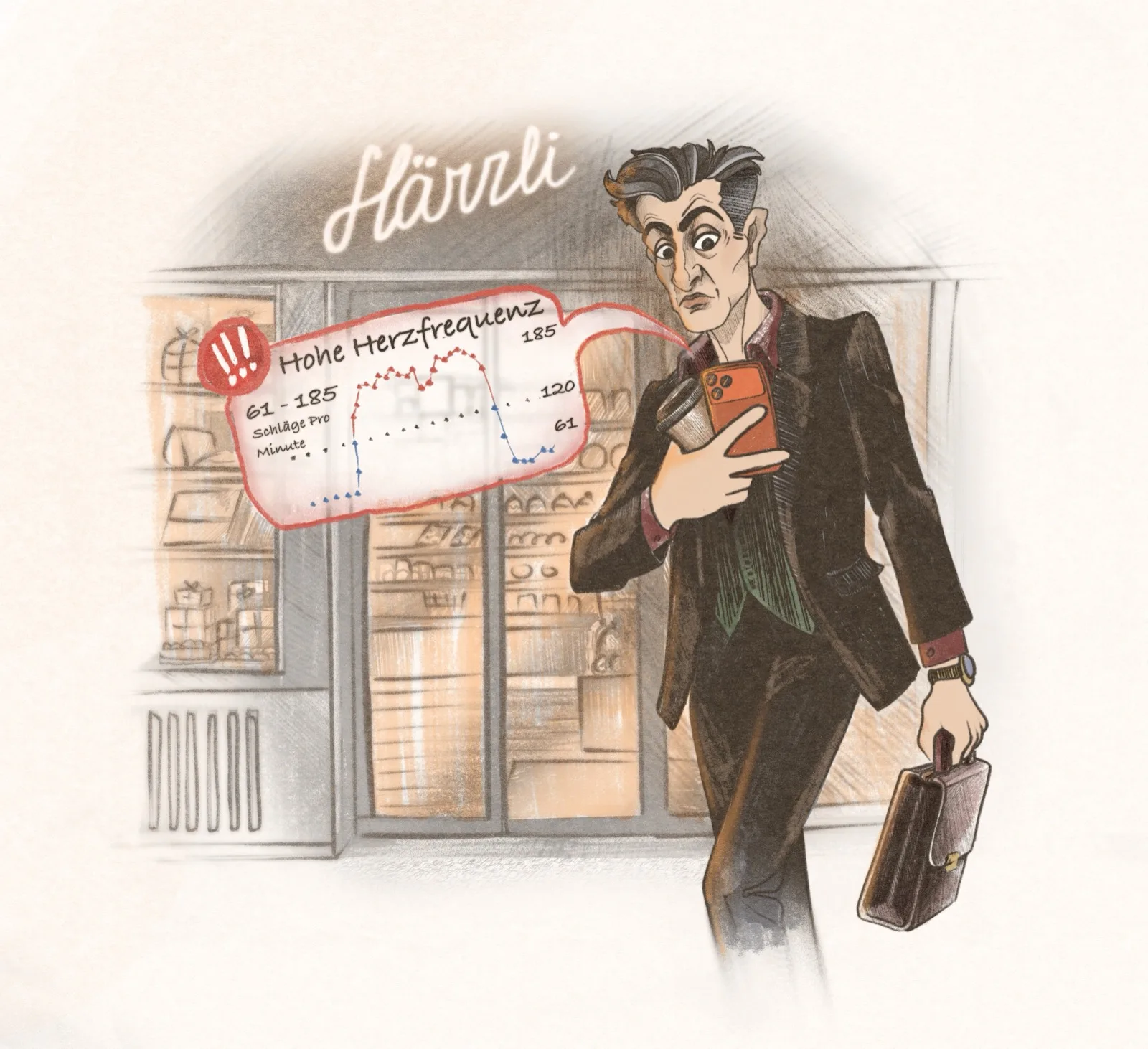
In atrial fibrillation, most dangerous blood clots form in a single place: the left atrial appendage. More than 90 percent of the clots that lead to a stroke in this rhythm disorder develop there [Cresti 2019]. Anticoagulant medication offers effective protection, yet not everyone tolerates it in the long term. For these patients there is a way to seal off the critical site directly. This article explains when the procedure makes sense, how it is carried out and what the trial evidence says.
What does closure of the left atrial appendage mean?
The left atrial appendage is a small pouch attached to the left atrium of the heart. In atrial fibrillation, blood flows only sluggishly there, and clots form easily. These clots can travel with the bloodstream to the brain and cause a stroke. In an interventional closure, a small umbrella-shaped device, known as an occluder, is placed in the appendage via a catheter and opened there. It seals the pouch permanently, so that no more blood enters it and no further clots can break loose.
The procedure is intended mainly for people with atrial fibrillation who have an elevated stroke risk but cannot take anticoagulant medication permanently, for example because of repeated bleeding. The 2024 ESC guideline on atrial fibrillation lists percutaneous left atrial appendage closure as an option in this situation [ESC 2024]. In randomised trials with carefully selected patients, the procedure was as effective as anticoagulant medication and was associated with fewer non-procedural bleeding events [Osmancik 2022].
Why atrial fibrillation raises the risk of stroke
Atrial fibrillation is one of the most common heart rhythm disorders. Instead of beating in an orderly fashion, the atria are stimulated rapidly and irregularly by faulty electrical signals. They no longer contract in a coordinated way, blood pools, and the flow slows down, particularly in the left atrial appendage. Clots can form from this stagnant blood.
If such a clot breaks loose, it travels through the aorta into the vessels of the brain, where it can block an artery. The result is an ischaemic stroke. On average, strokes caused by atrial fibrillation are more severe than others and more often leave lasting impairment.
How high is your individual risk?
How high the stroke risk in atrial fibrillation turns out to be depends on several factors. It is assessed with the CHA2DS2-VASc score, which awards points for age, sex, high blood pressure, diabetes, heart failure, vascular disease and a previous stroke [ESC 2024]. The higher the score, the greater the annual risk.
This value provides the basis for weighing up whether anticoagulant treatment is indicated. The bleeding risk is assessed in parallel. Only the two assessments together give a clear picture of which protective strategy suits you. For people with a high stroke risk and, at the same time, a high bleeding risk, left atrial appendage closure moves to the fore.
| Treatment pathway | Mechanism | Typical situation |
|---|---|---|
| Oral anticoagulation (DOAC) | Inhibits blood clotting throughout the body | Standard treatment at elevated risk, good tolerability |
| Interventional left atrial appendage closure | Mechanically seals the main source of clots | Intolerance or high bleeding risk |
| Surgical closure | Closure during a heart operation that is planned anyway | Alongside cardiac surgery [Whitlock 2021] |
How is the procedure carried out?
Interventional left atrial appendage closure takes place in the cardiac catheterisation laboratory, usually under general anaesthesia or deep sedation. The team guides a thin catheter through a vein in the groin to the heart and crosses the atrial septum. The occluder is then positioned in the left atrial appendage and opened.
Throughout the procedure, the team monitors the exact position with X-ray fluoroscopy and an ultrasound examination through the oesophagus, known as transoesophageal echocardiography. This makes it possible to check that the device sits tightly and securely before it is finally released. The procedure usually takes about an hour.
One important point beforehand: if a clot is already present in the appendage, the closure cannot be performed. In that case, anticoagulant treatment is given first for several weeks until the clot has dissolved [ESC 2024].
What happens after the procedure?
The procedure is usually followed by a short hospital stay of a few days. Before discharge, the team checks that the occluder is correctly positioned, often with an ultrasound examination. Further follow-up checks are scheduled after a few weeks and months.
In the first period after closure, temporary drug treatment is usually needed until the inner surface of the occluder is fully covered by the body's own tissue. Which regimen is chosen depends on your individual situation and your bleeding risk. Once this phase is complete, permanent anticoagulation can be discontinued in many cases.
What does the evidence say?
Left atrial appendage closure is one of the well-studied interventional procedures in cardiology. In the PRAGUE-17 trial, catheter-based closure in high-risk patients was on a par with modern anticoagulants (DOACs) over a median follow-up of 3.5 years, with fewer non-procedural bleeding events [Osmancik 2022].
The combined 5-year data from the PROTECT-AF and PREVAIL trials showed comparable stroke prevention compared with the older anticoagulant warfarin, with less bleeding and lower mortality [Reddy 2017]. In open-heart surgery, additional surgical closure of the appendage reduced the risk of stroke and thromboembolism by around a third in the LAAOS-III trial [Whitlock 2021].
These data support the role of the procedure, but they do not replace an individual assessment. Whether left atrial appendage closure is the right option for you can only be clarified after a careful examination and a conversation about your risks and your wishes. Worth knowing: the procedure is a planned, preventive measure. So there is time to discuss the findings calmly and weigh the various protective strategies against one another before a decision is made.
Frequently asked questions about left atrial appendage closure
Who is a candidate for left atrial appendage closure?
The procedure is intended for people with atrial fibrillation and an elevated stroke risk who cannot or do not wish to take anticoagulant medication permanently, for example after repeated bleeding. Whether the procedure is suitable is decided after an individual examination and an assessment of stroke and bleeding risk.
Are blood thinners still needed after the procedure?
For a transitional period, drug treatment is usually needed until the occluder has become embedded in tissue. After that, permanent anticoagulation can be discontinued in many cases. The exact approach depends on your bleeding risk and on how healing progresses. The team therefore sets the regimen individually for you and adjusts it at the follow-up checks.
How long do the procedure and the hospital stay take?
The procedure itself usually takes around an hour. It is typically followed by a short hospital stay of a few days, during which the position of the occluder is checked.
How safe is left atrial appendage closure?
Closure is an established procedure with a good evidence base. As with any procedure on the heart, there are risks, such as injury to the heart wall or malposition of the occluder. Continuous imaging during the procedure keeps these risks low. An open conversation about the benefits and possible complications is part of the preparation.
What is the difference from catheter ablation for atrial fibrillation?
Catheter ablation treats the rhythm disorder itself by ablating faulty electrical signals in the heart. Left atrial appendage closure does not change the rhythm. It prevents stroke by sealing the main source of clots. The two procedures pursue different goals and can complement each other in certain situations.
Does the atrial fibrillation persist after the procedure?
Yes. Left atrial appendage closure does not eliminate atrial fibrillation. The heart continues to beat irregularly. The procedure lowers the stroke risk by sealing the site where most dangerous clots form.
This article is for information purposes and does not replace a personal consultation with your physician. Whether left atrial appendage closure makes sense for you is something we clarify together with you at Dein Team Herzzentrum after a thorough evaluation.